Pittsburgh Smart Loading Zones (SLZ)
User-Centered Research and Evaluation
case study • 8 min read

Smart Loading Zones aim to create more efficient and safe curb usage by automating payments and analyzing real-time usage.
The Problem
Negative Public Perception
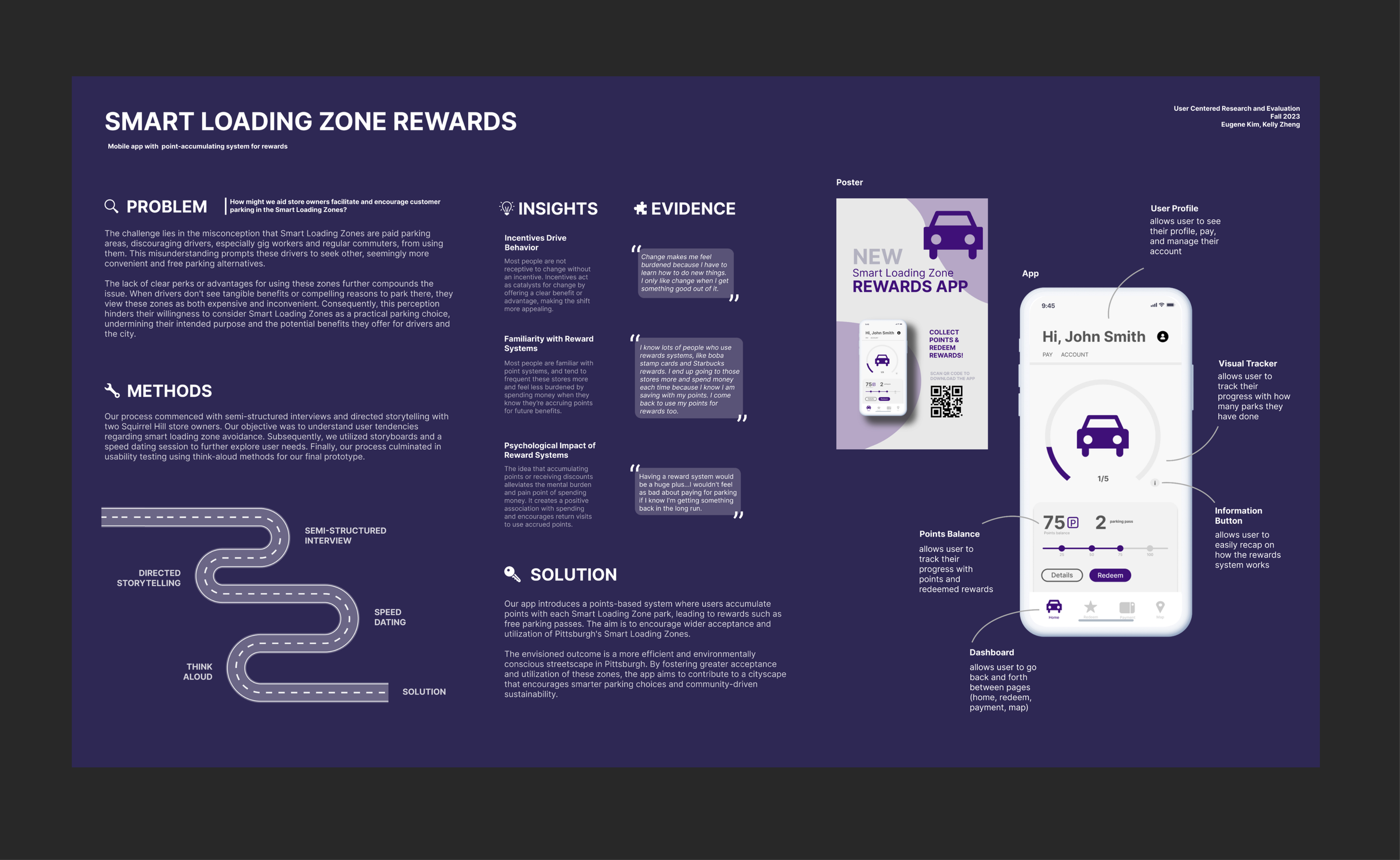
Pittsburgh introduced Smart Loading Zones (SLZ) to optimize curbside access for delivery drivers and small businesses. However, public perception turned negative and drivers viewed the zones as paid, restrictive, and inconvenient.
This misconception discouraged adoption and displaced traffic to free but congested areas.
I wondered: How might we aid store owners in facilitating and encouraging customer parking in Smart Loading Zones?
Research + Opportunity, Problem Definition, User Research,
Process
Ideation, Prototyping + Interaction, Usability Testing
User Researcher + UX Designer + Project Manager
My Role
Figma, FigJam, Adobe CC
Tools
4 Months
Duration
Fall 2023
Table of Contents
01 Research Goals
Uncovering Barriers in SLZ Adoption
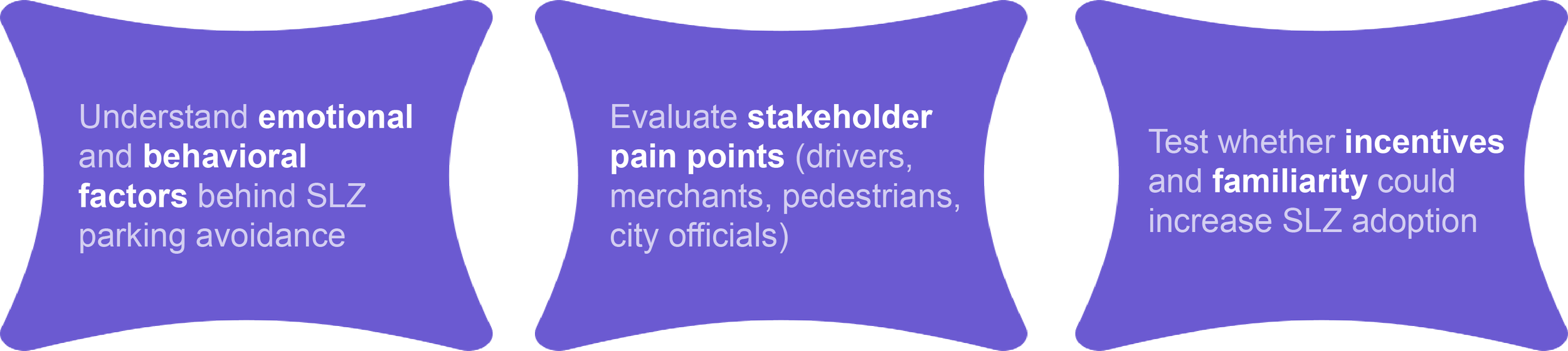
Our aim was to uncover barriers to SLZ usage and identify design opportunities to build trust, convenience, and motivation among drivers and small businesses
Research objectives
02 Methods/ Processes
Interative + Human-Centered Methods
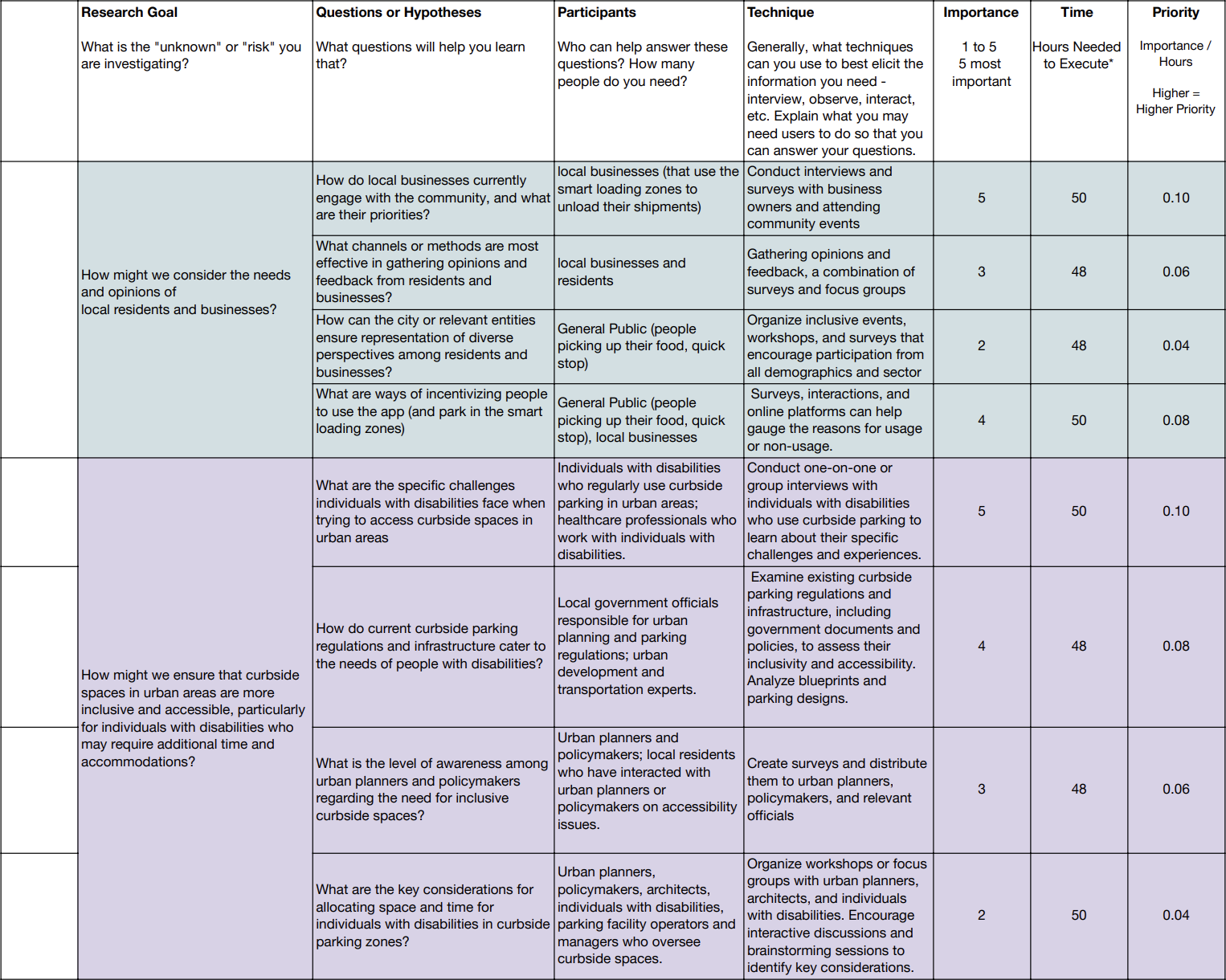
We structured the study with multiple methods over 10 sections
Phase
1-2
Methods to Insights
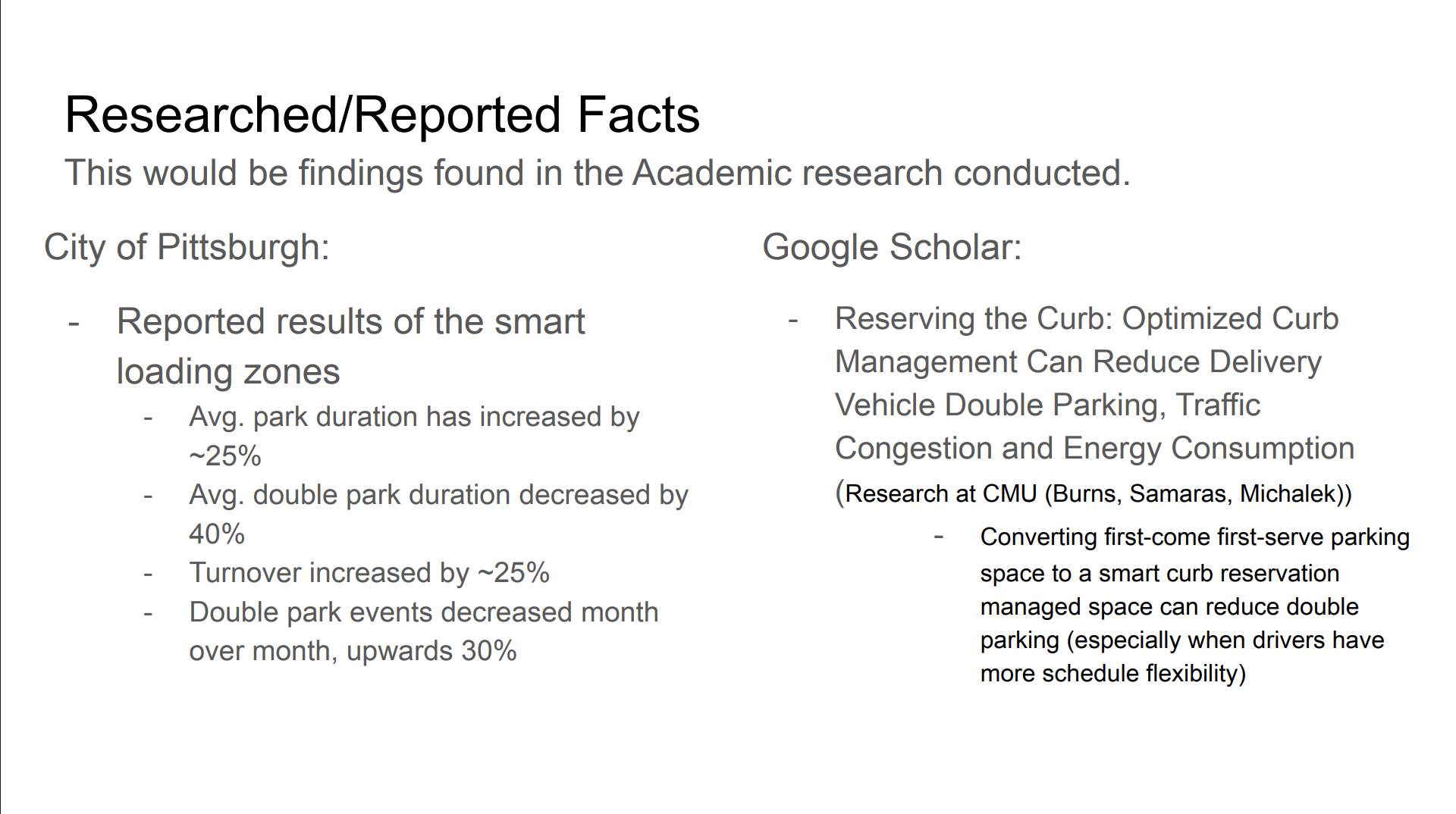
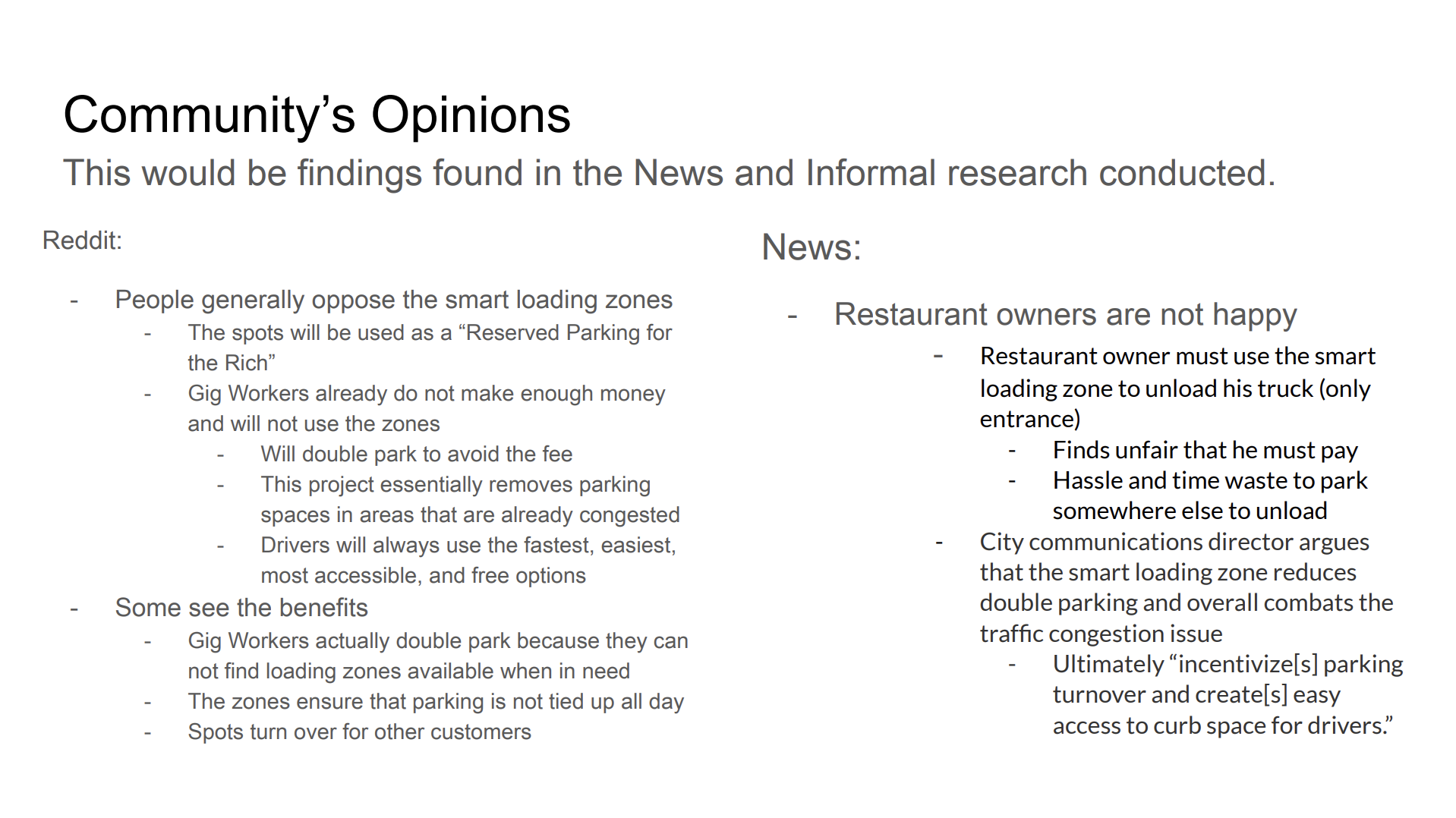
Each stage of research (from the city-level contextual inquiry to in-store interviews) revealed deeper emotional and behavioral patterns that showed how Pittsburgh residents interacted with Smart Loading Zones.
Supporting Image
As we transitioned from data collection to synthesis, our focus shifted from what users do to why they feel and behave this way. This point marked the move from methodology to meaning. This is when our interviews, observations, and heuristic audits began to converge into insights that guided our design direction.
3
Data Analysis + Hypothesis
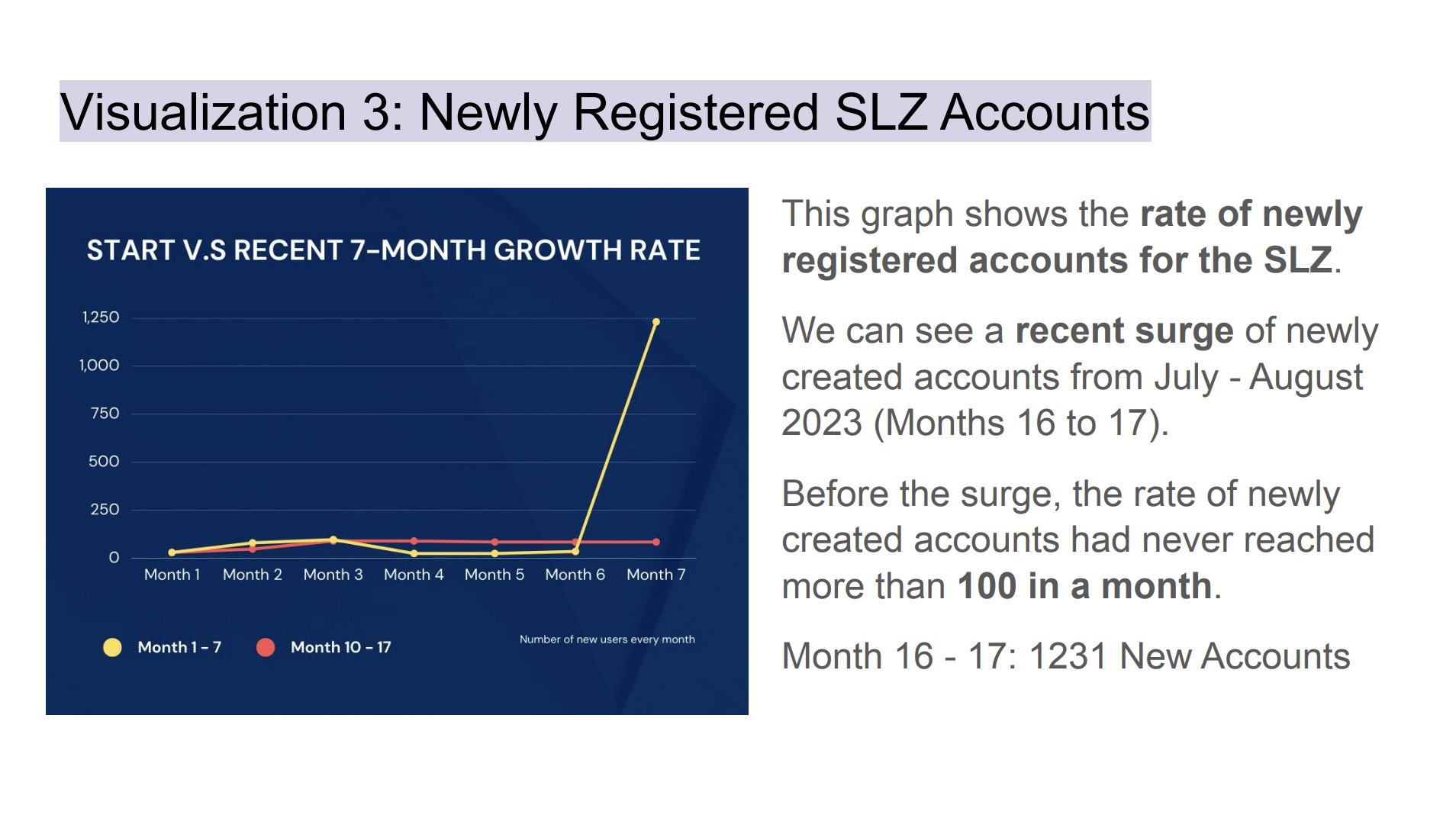
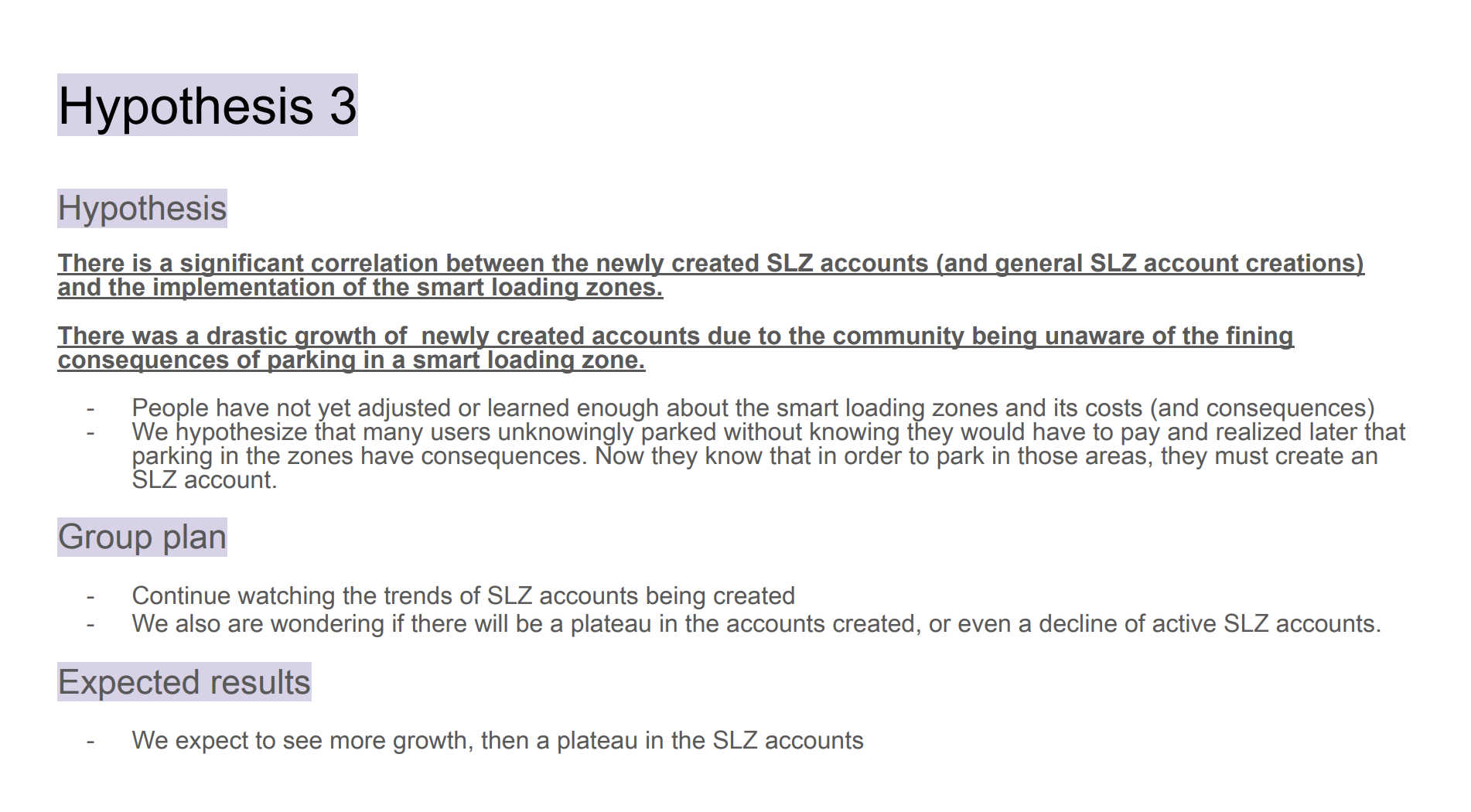
Analyzed SLZ usage data + found correlations + made hypotheses
4
5
6
7
8
9
10
Method
Research Goals + Contextual Inquiry
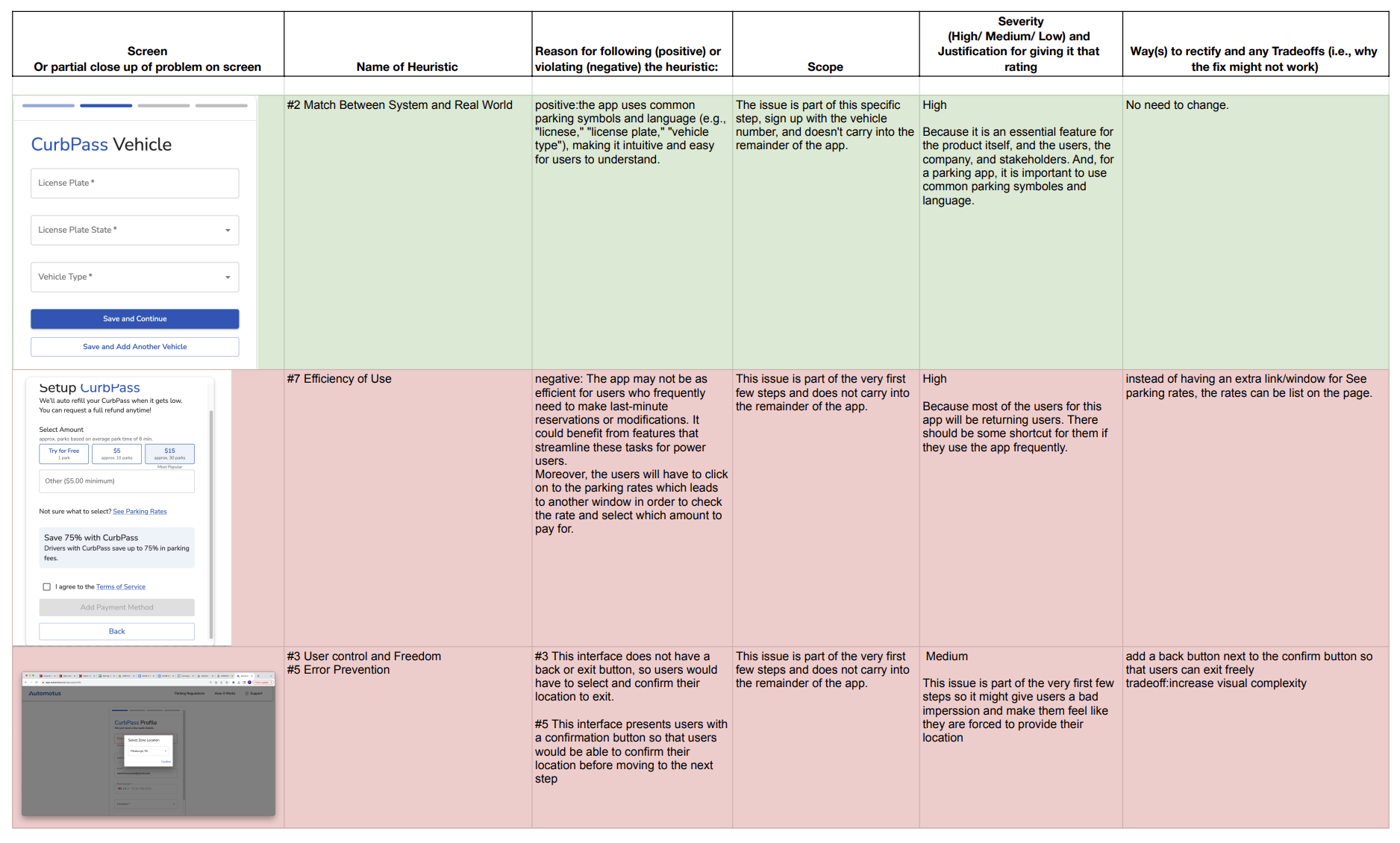
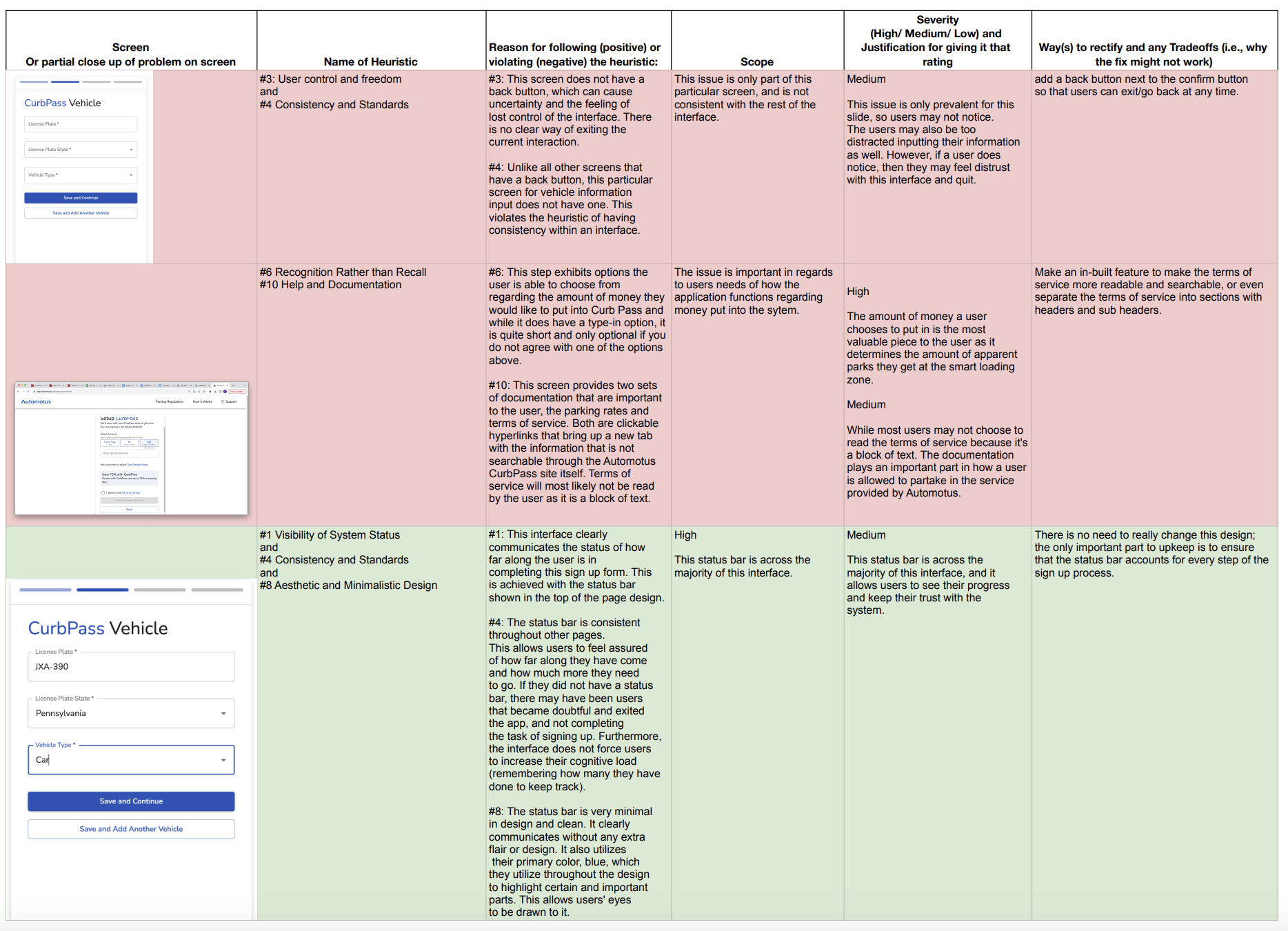
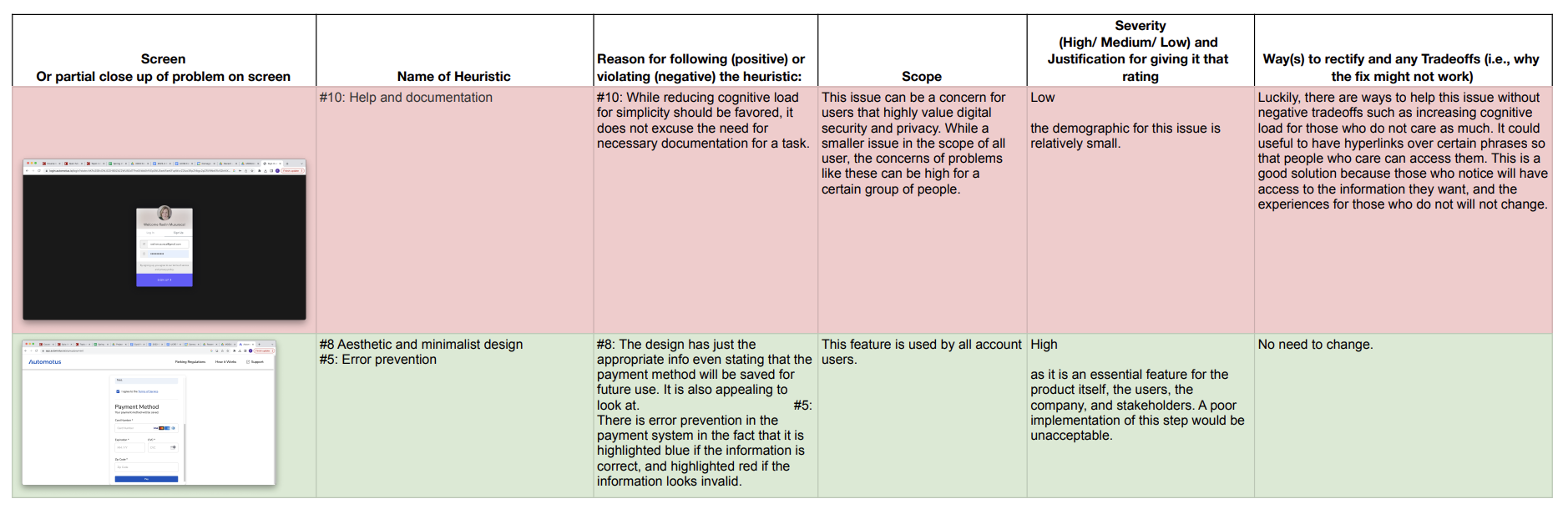
Heuristic Evaluation
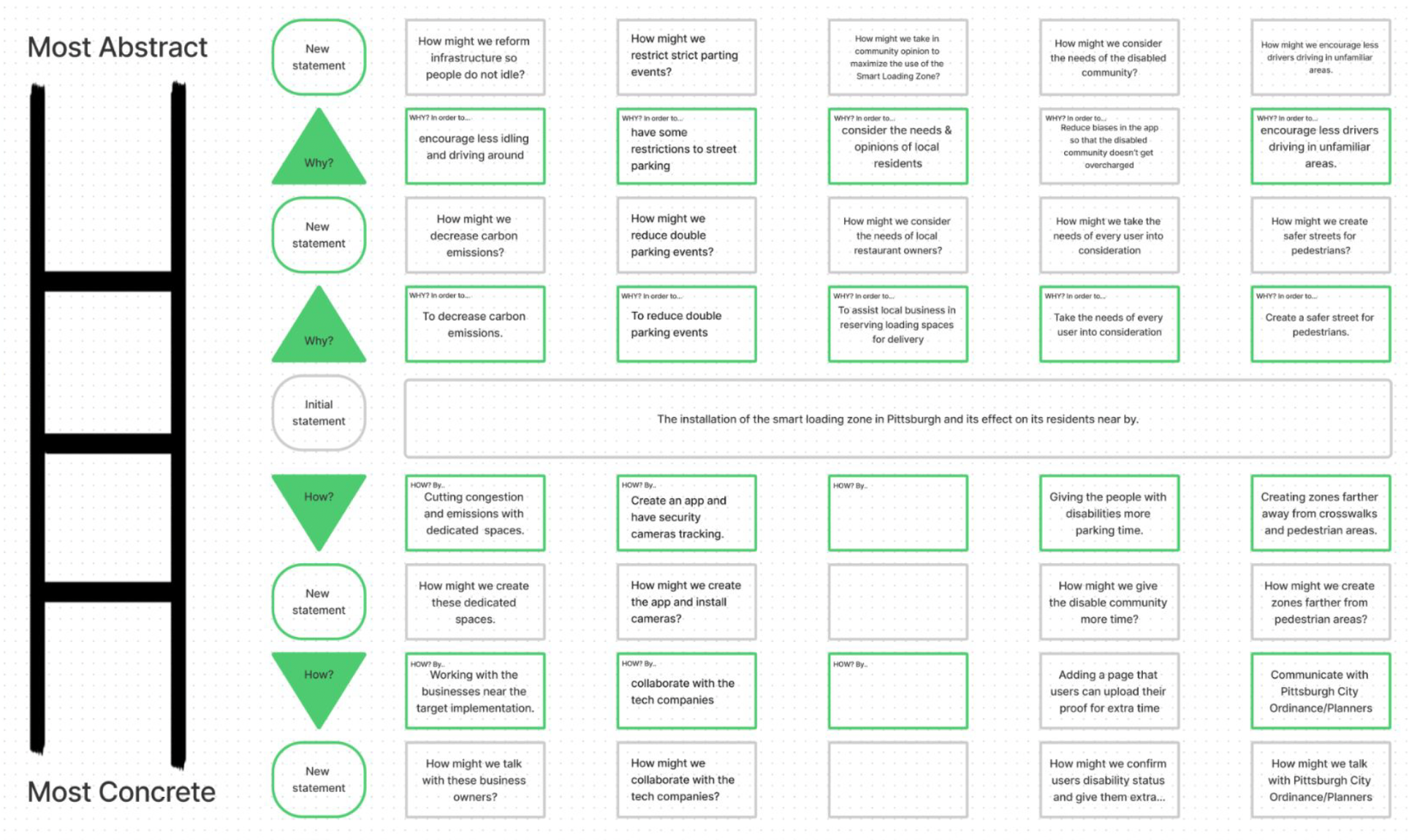
Abstraction Ladder + Reframing
Field Interviews + Affinity Mapping
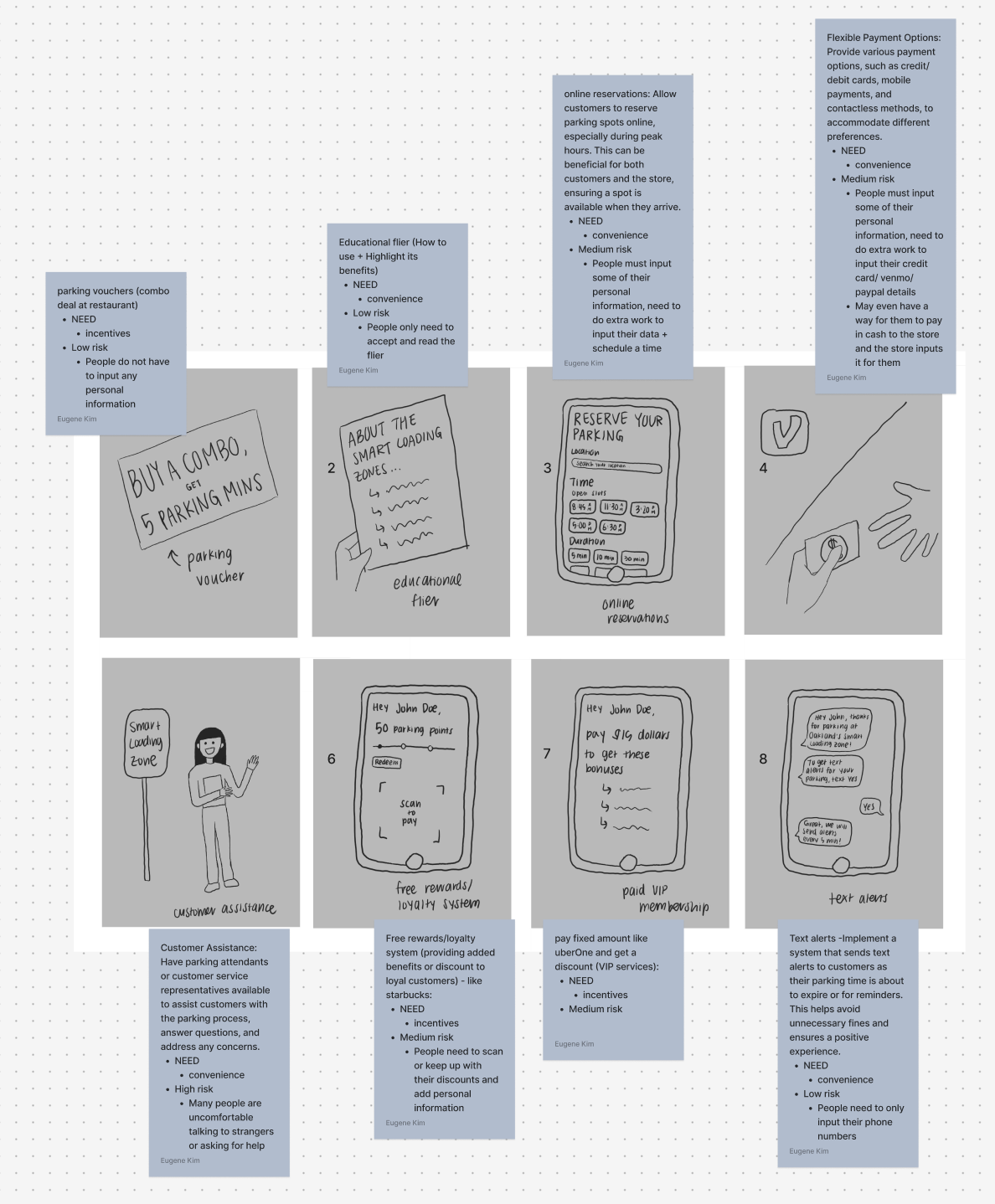
Synthesis + Storyboards
Concept Ideation
Lo-Fi → Mid-Fi Prototype Testing
Hi-Fi Think-Aloud Testing + Findings
Purpose
Established unknowns + selected stakeholders + performed field observations in Squirrel Hill
Audited the existing Automotus CurbPass interface + identified usability issues in feedback loops and payment flow
Shifted focus from compliance → community benefit + incentive alignment
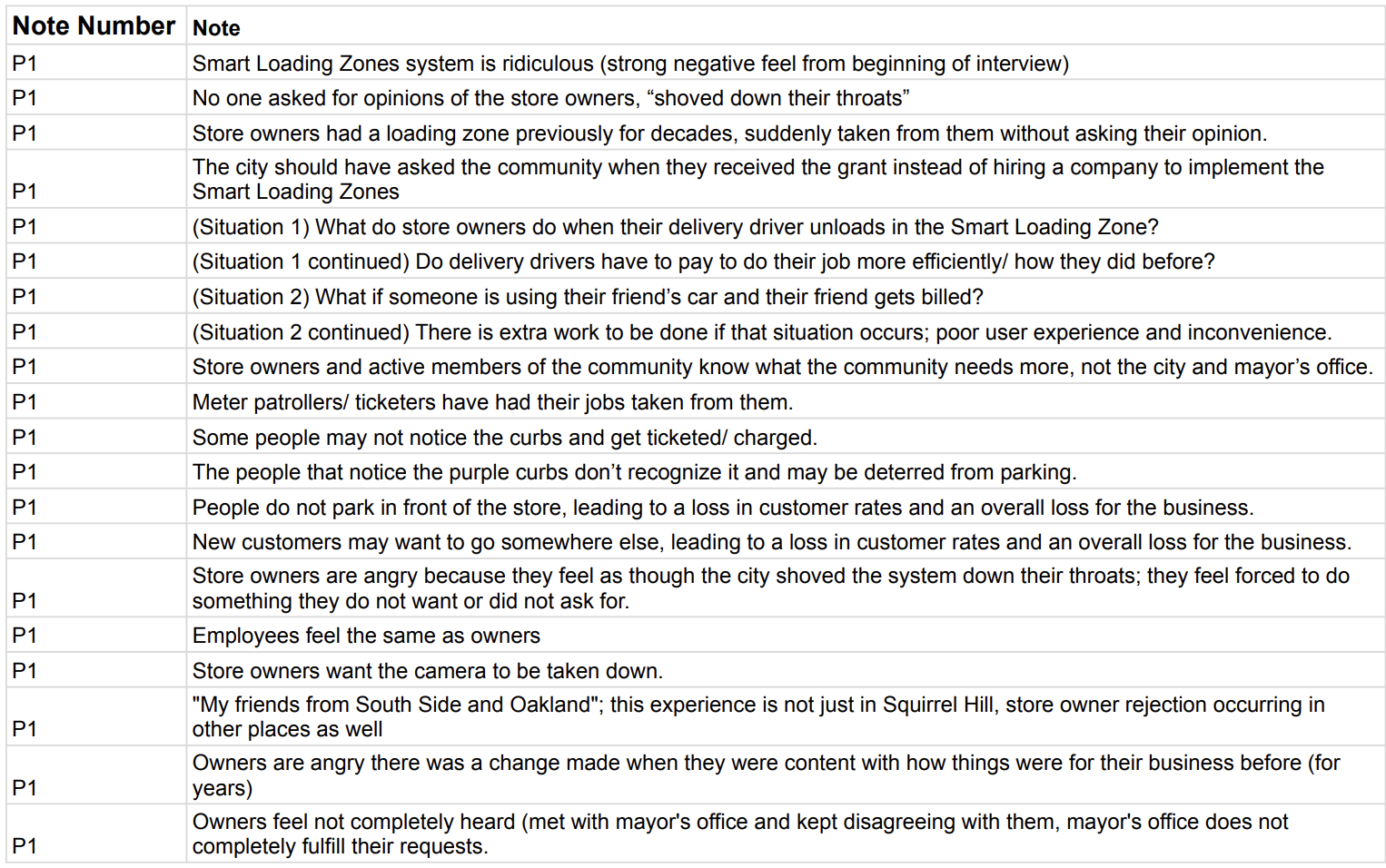
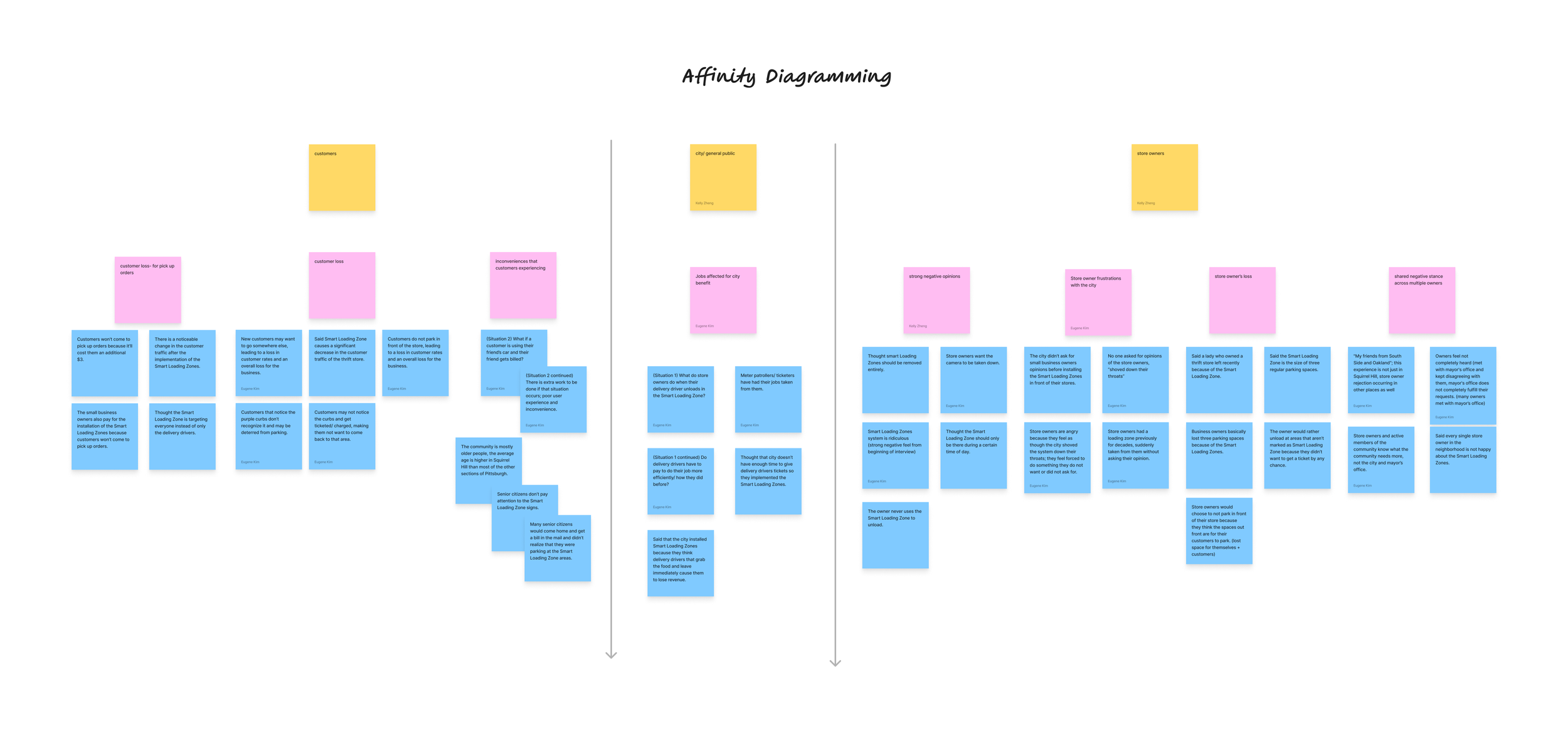
Conducted directed storytelling with five store owners + clustered findings → customer loss + owner frustration + city distrust
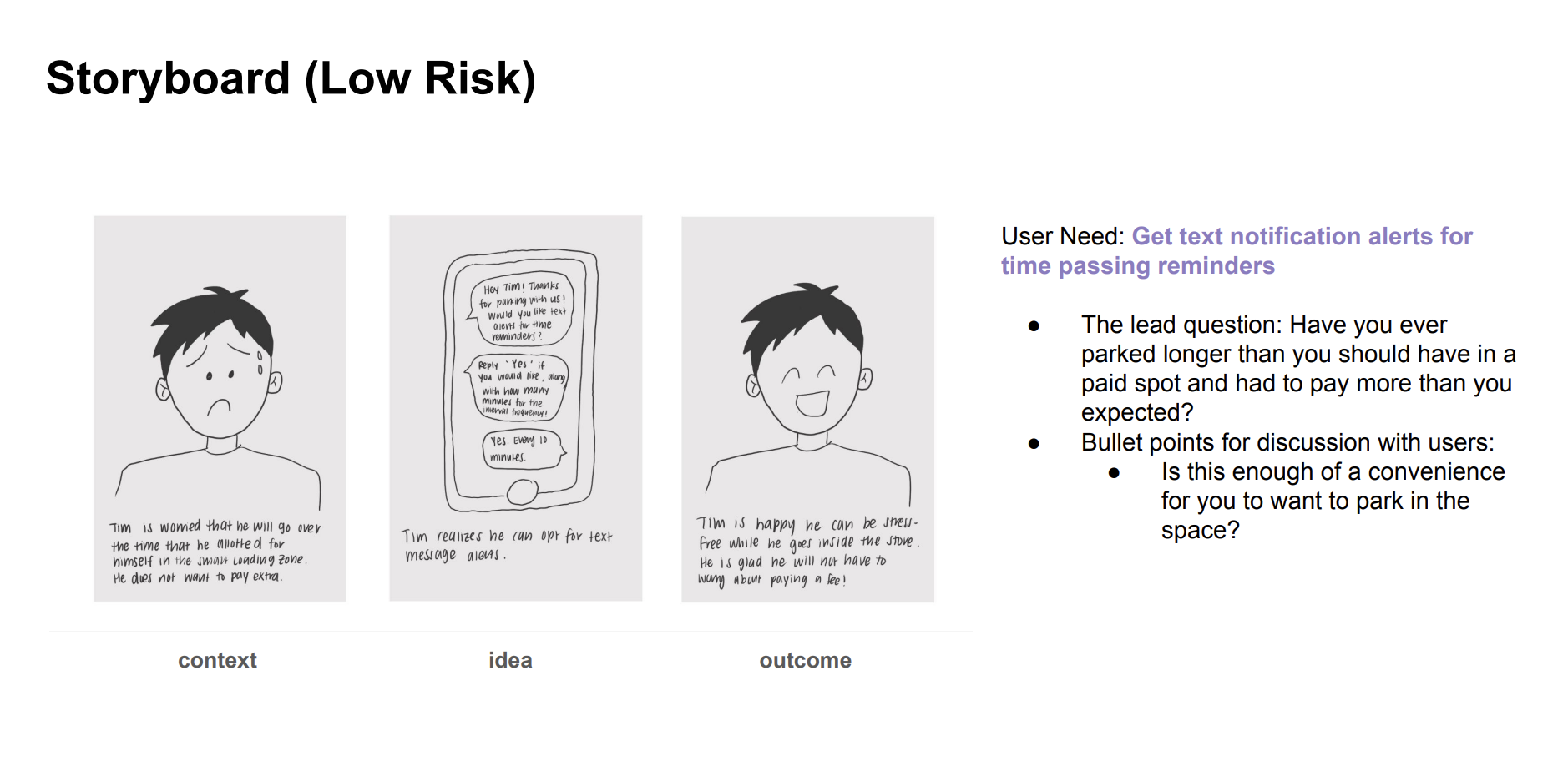
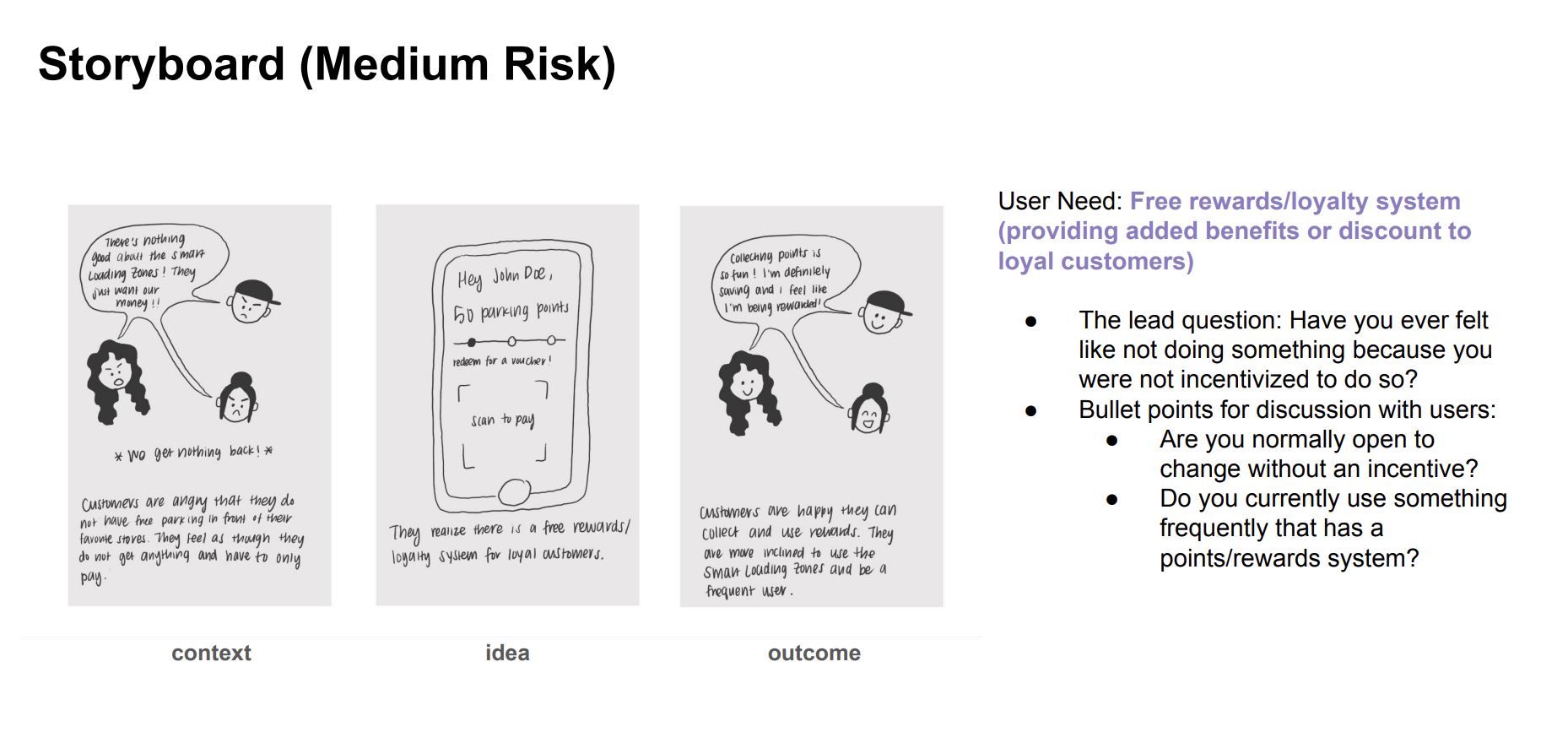
Visualized user pain points + tested concept directions through speed-dating sessions
Generated 40+ ideas via Crazy 8s + refined into a rewards-based incentive system
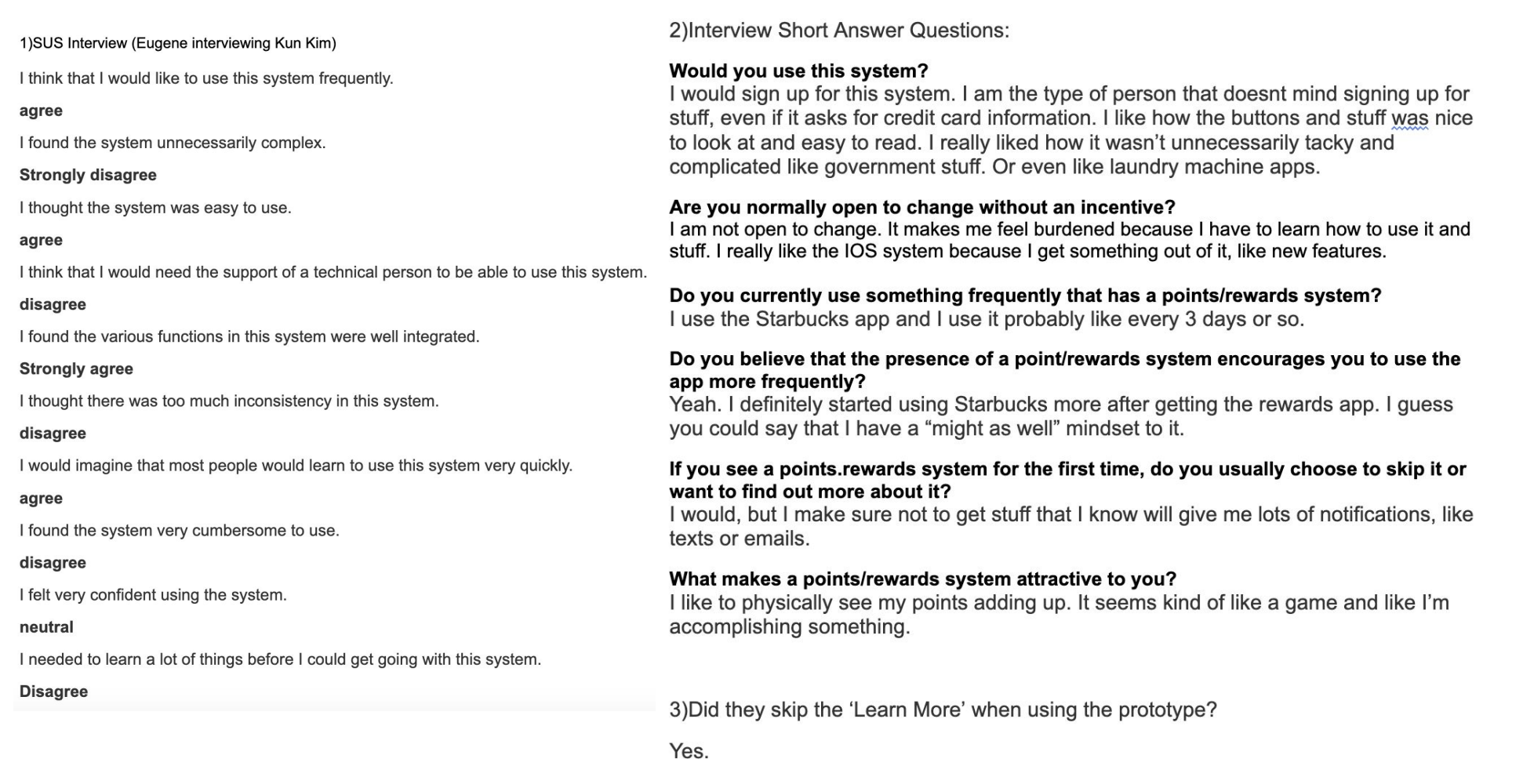
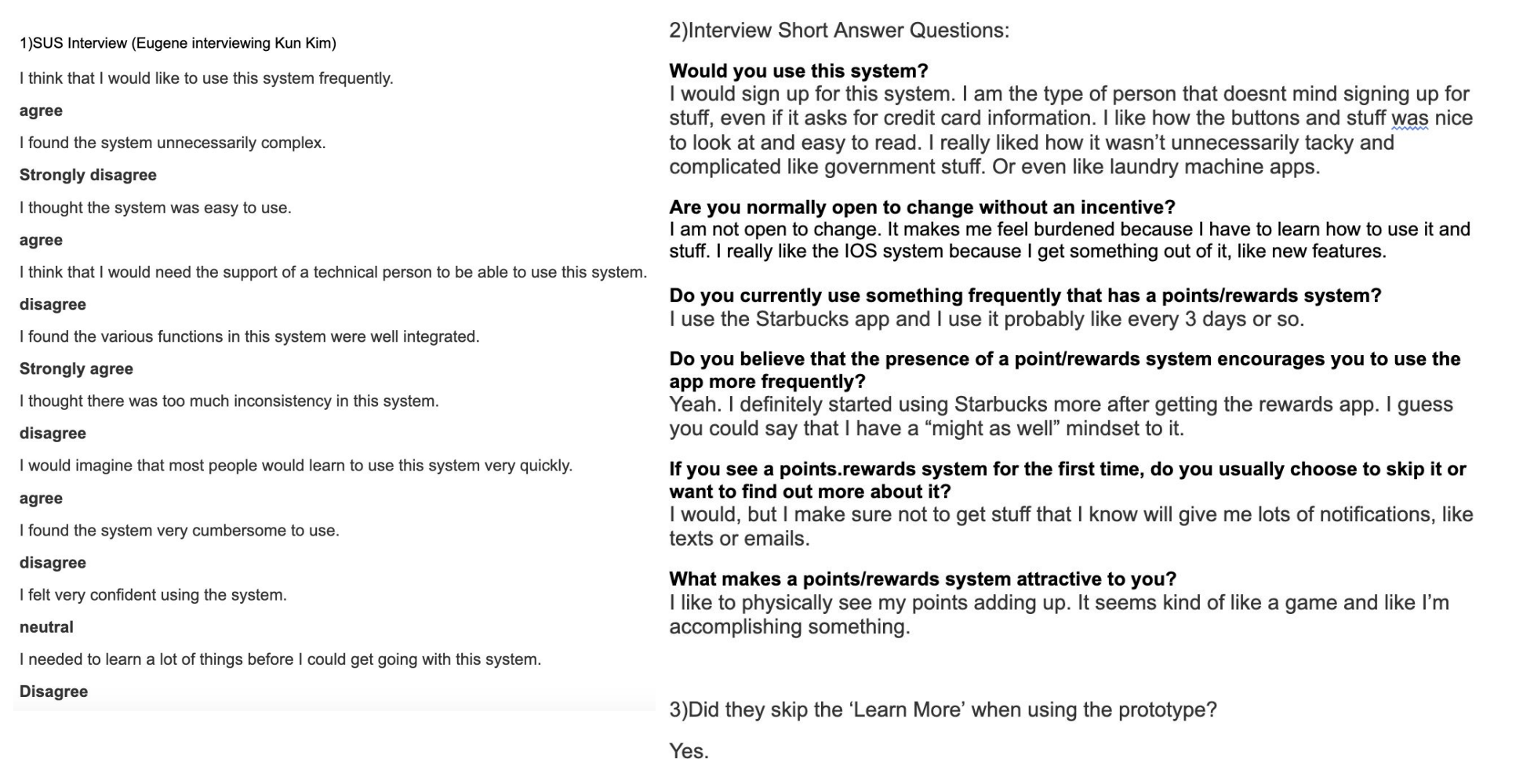
Used System Usability Scale (SUS) + qualitative interviews to validate familiarity with loyalty-app interfaces
Evaluated final design with users + gathered evidence of motivation, usability and future improvements
03 Key Insights
Reframing Frustration into Opportunity
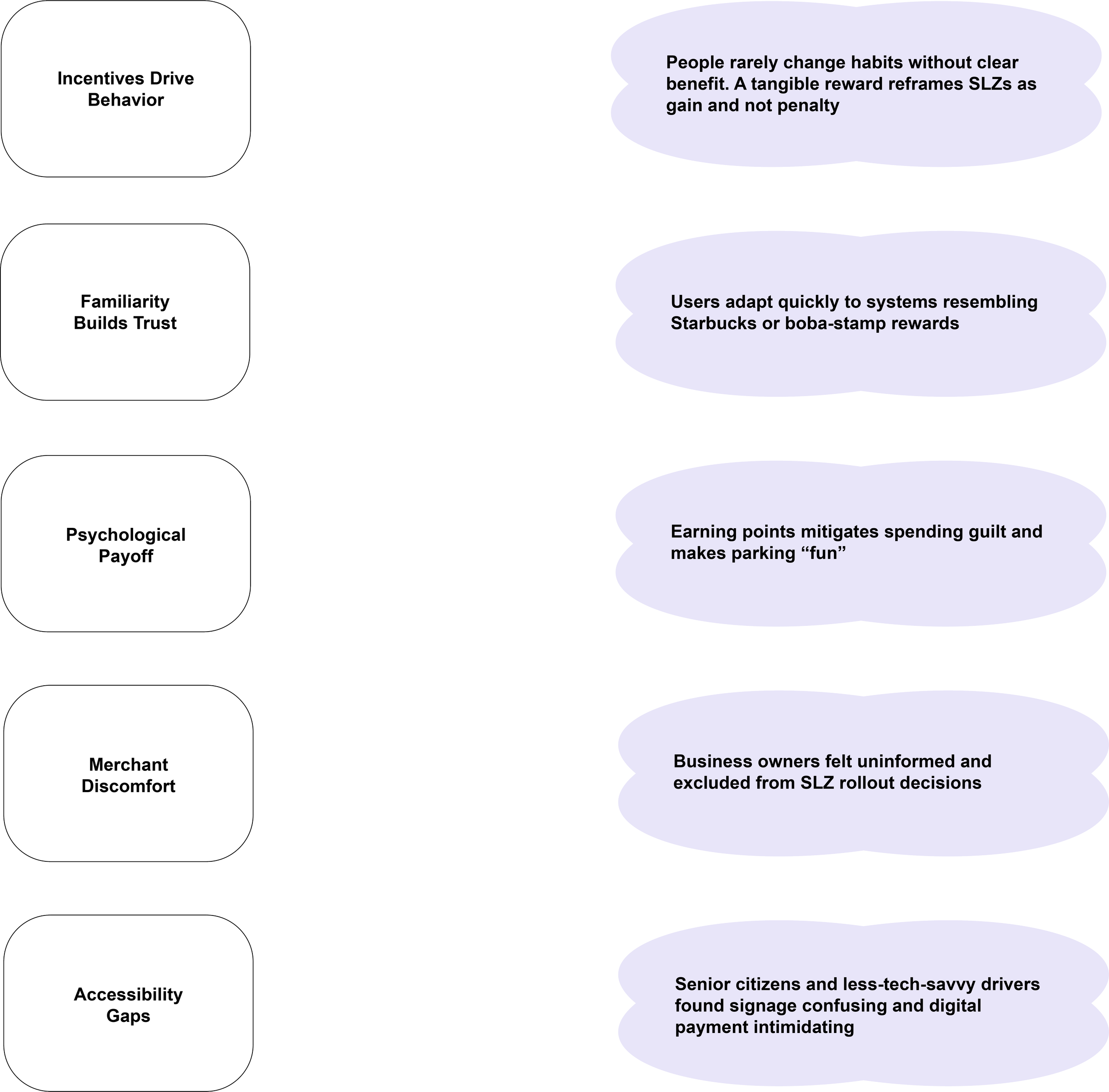
Our synthesis showed that resistance to SLZs was rooted in human perception, trust, and motivation.
Through affinity diagramming and interview interpretation, we identified five recurring themes that uncovered why drivers avoided the system and what could motivate change.
04 Design Solution
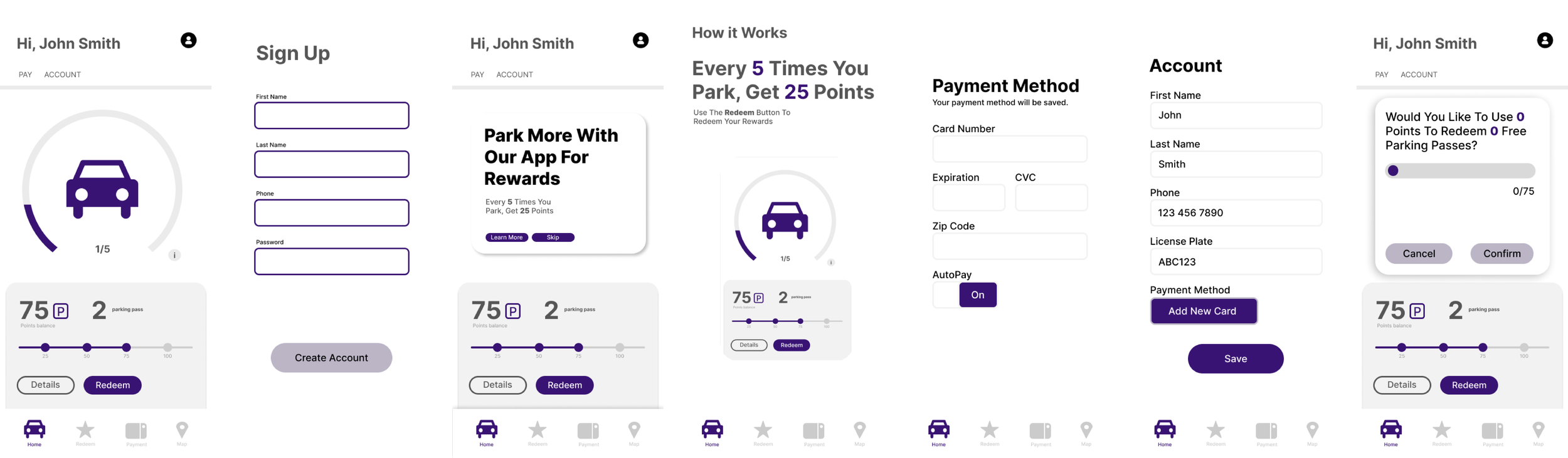
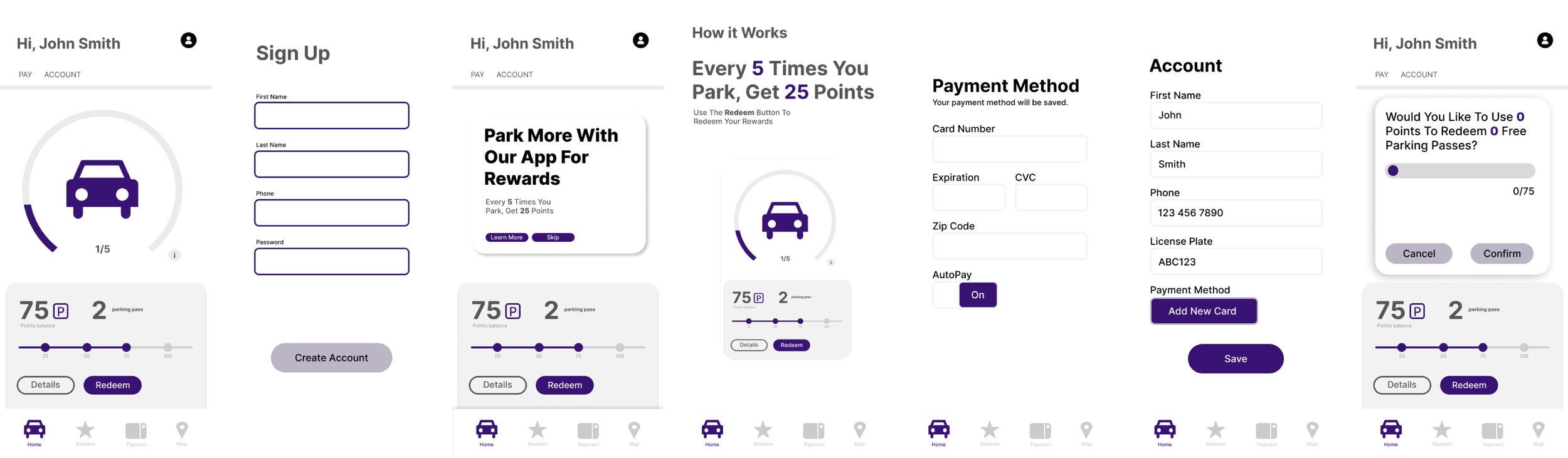
Smart Loading Zone Rewards App
A mobile rewards platform that transforms paid parking into a rewarding + gamified experience
Key Features

Outcomes
Reframes SLZs as smart and rewarding rather than paid and bothersome.
Encourages both economic and environmental sustainability through equitable curb usage.
05 Testing + Findings
Validating Familiarity + Motivation + Usability
Through multiple testing rounds (from low-fi SUS evaluations to hi-fi think-aloud sessions) we measured how well the SLZ Rewards concept resonated with real users.
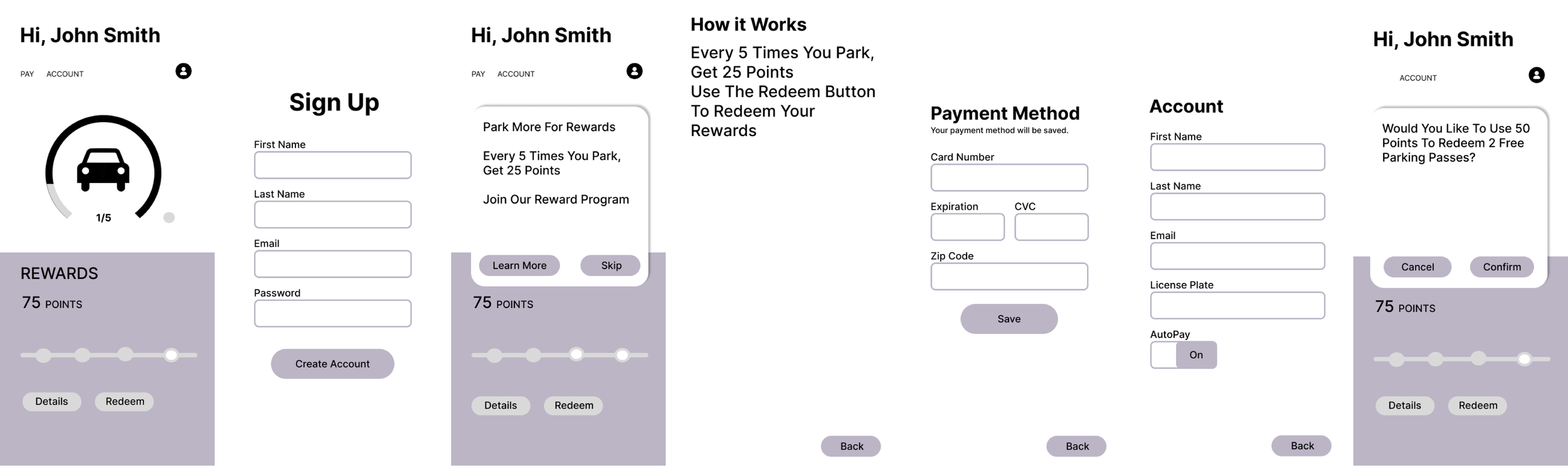
Lo-Fi Prototype (SUS Testing)
Participants rated the app easy to use + integrated + confidence-building
All skipped the “Learn More” tutorial → confirms high familiarity with loyalty apps
The results confirmed that familiar reward patterns and visible progress tracking = comfort and motivation, while feedback from participants guided refinements in visual engagement, payment flow and feature clarity.
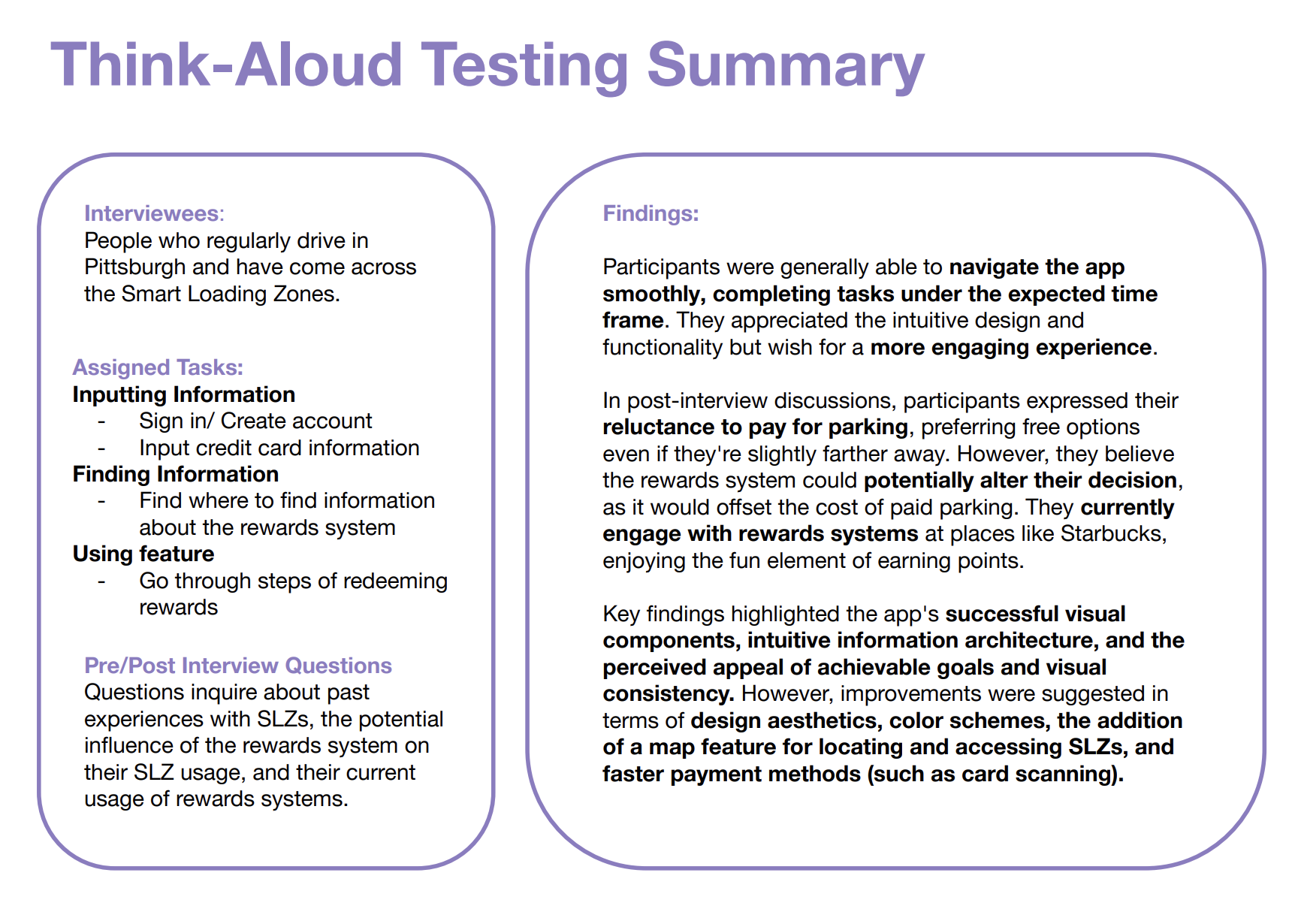
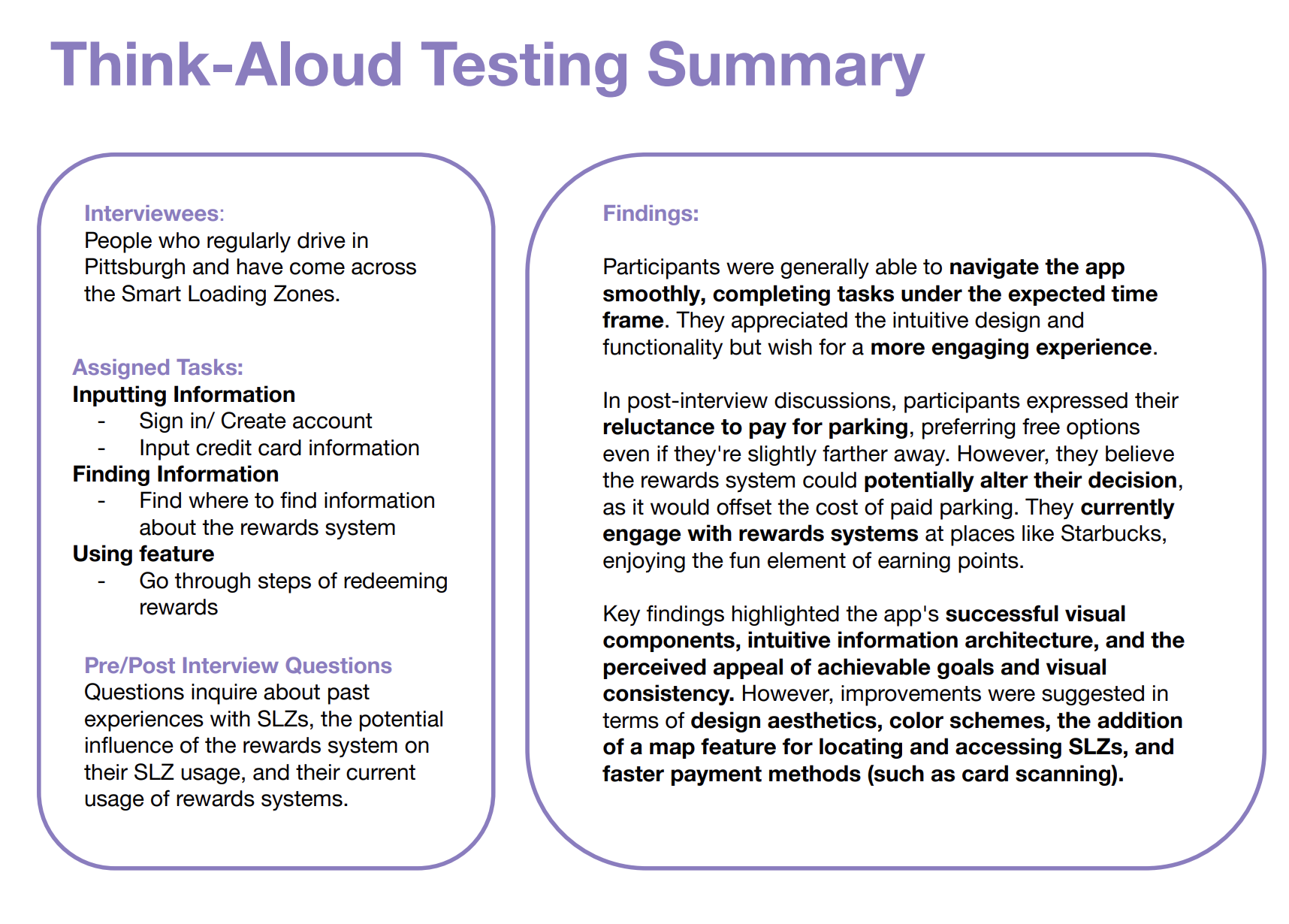
Hi-Fi Prototype (Think-Aloud Testing)
Tasks (login → payment → redeem) completed < 5 minutes
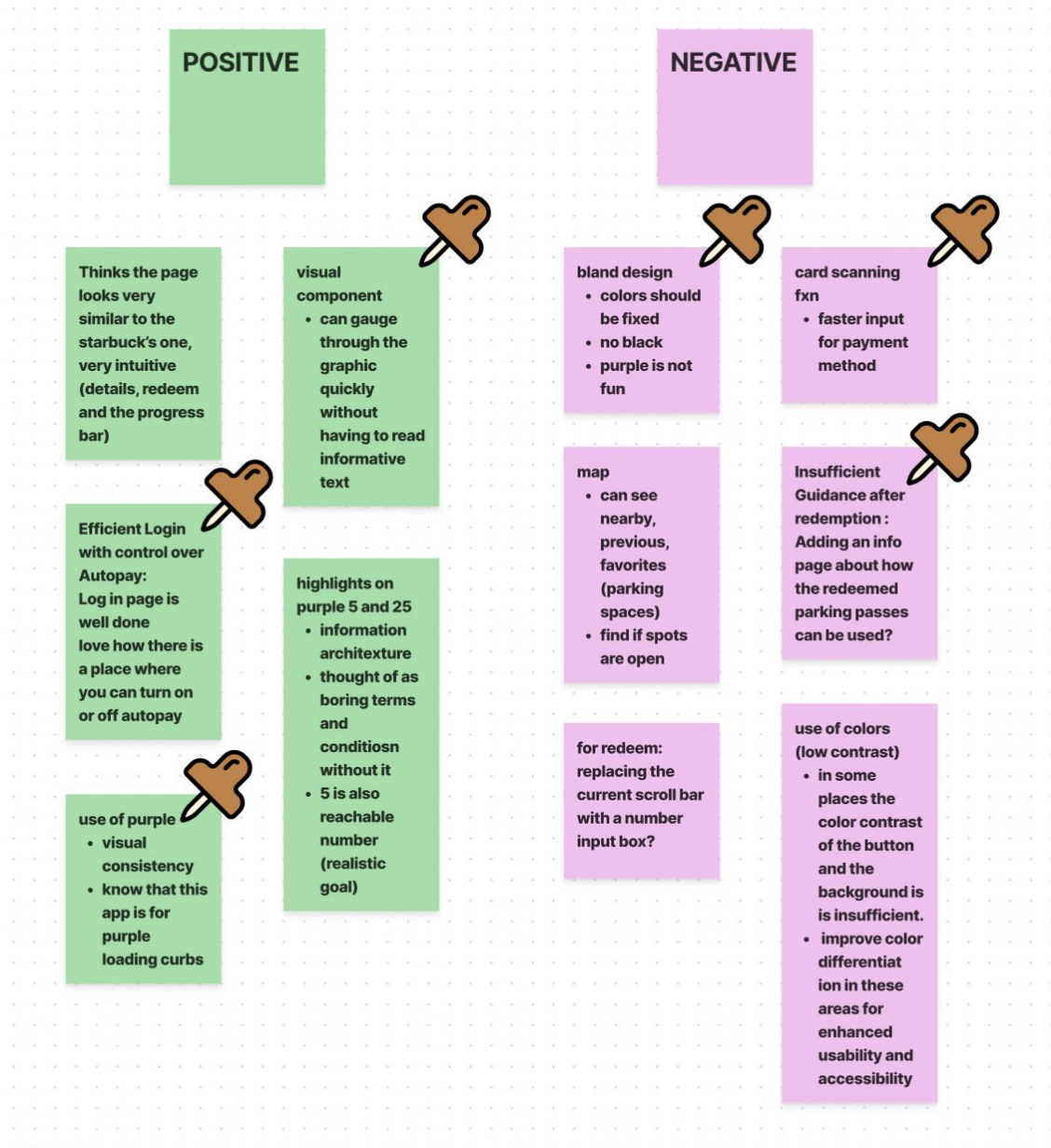
Users liked visual clarity and goal realism (5-point progress)
Desired more color saturation, payment autofill, and a map of nearby zones
06 Impact + Reflection
From Civic Frustration to Design Opportunity
Impact
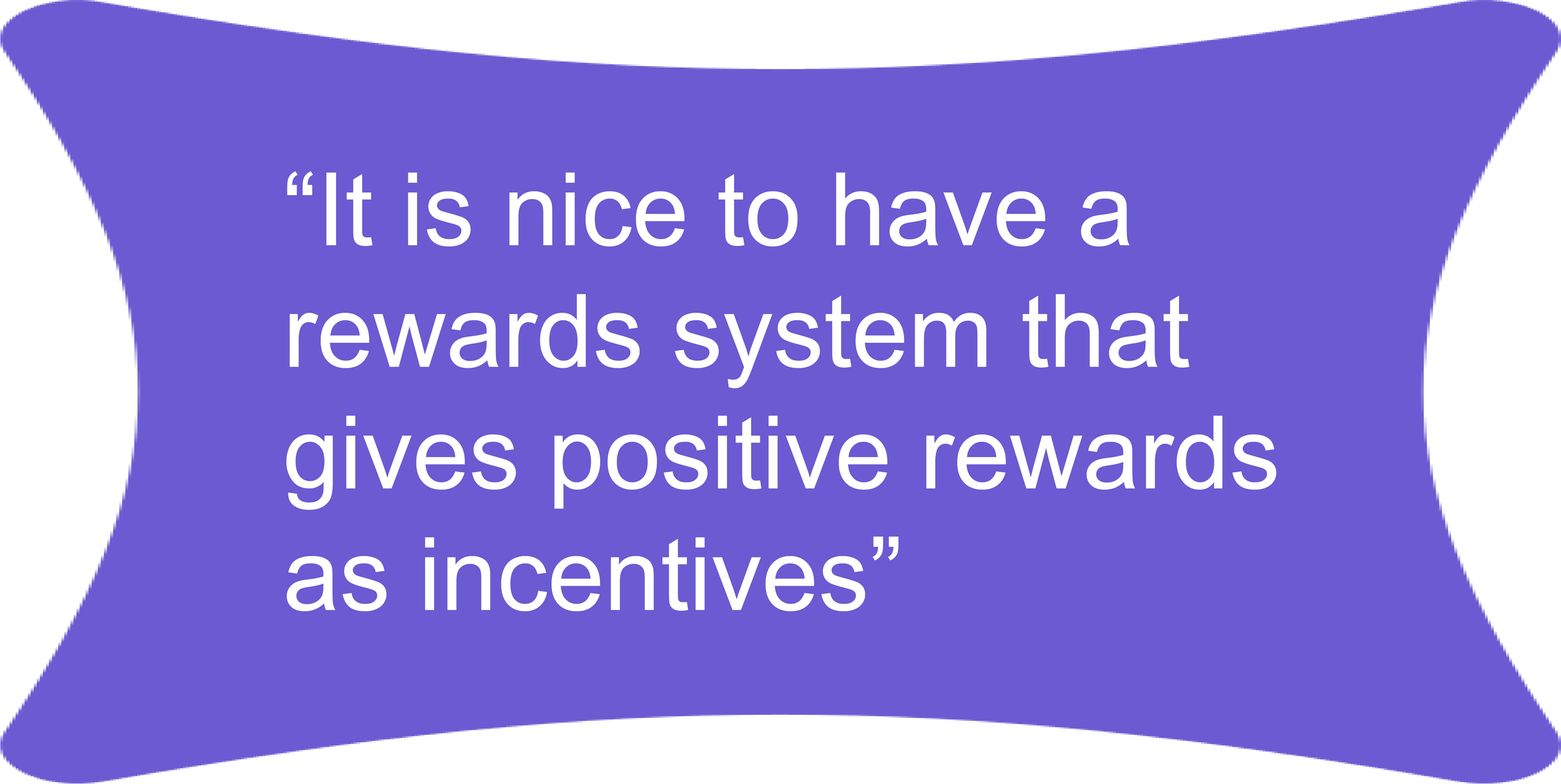
Testing showed that participants who normally avoided SLZs would consider parking there if a reward system existed.
This project taught me how to…
Reflection
This project transformed a civic pain point into an opportunity for empathy-driven design.
By combining behavioral research with incentive-based systems, I learned how trust, familiarity and emotional reward can shift perceptions of public infrastructure.

07 Next Steps
Where We Could Go From Here
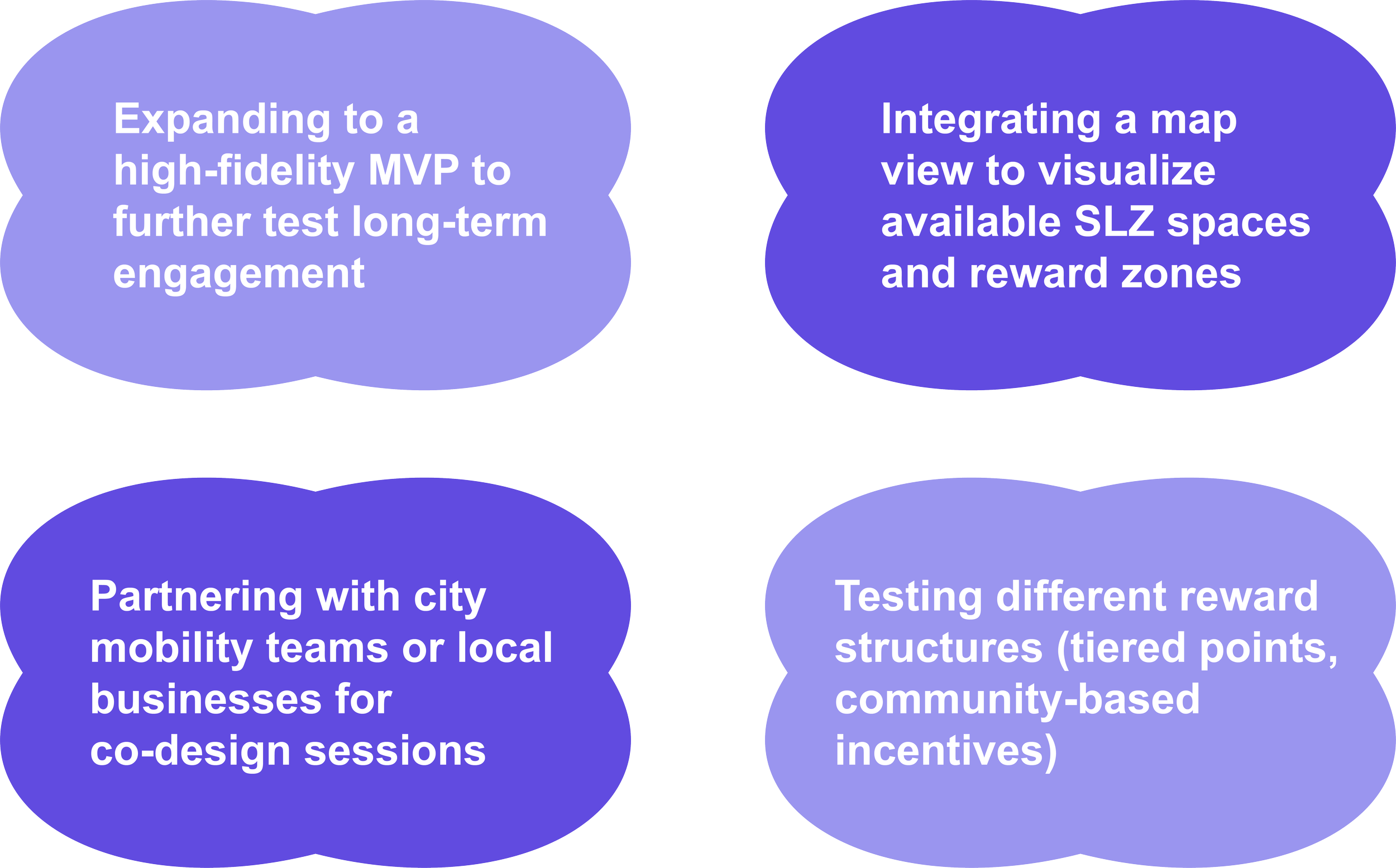
While the Smart Loading Zone Rewards concept remained at the prototype stage, our findings opened clear directions for future exploration.
Potential Next Steps
08 Final Deliverable
Prototype + Documentation
Through extensive research, testing, and iterative prototyping, Smart Loading Zone Rewards reimagines urban parking as a participatory, positive and data-driven system.
The project demonstrates how UX research can shape civic behavior toward shared community value.
feel free to click around!